Category: Women’s Rights

  • Iran’s Nationwide Uprising and Deadly Government Crackdown

    Iran’s Nationwide Uprising and Deadly Government Crackdown

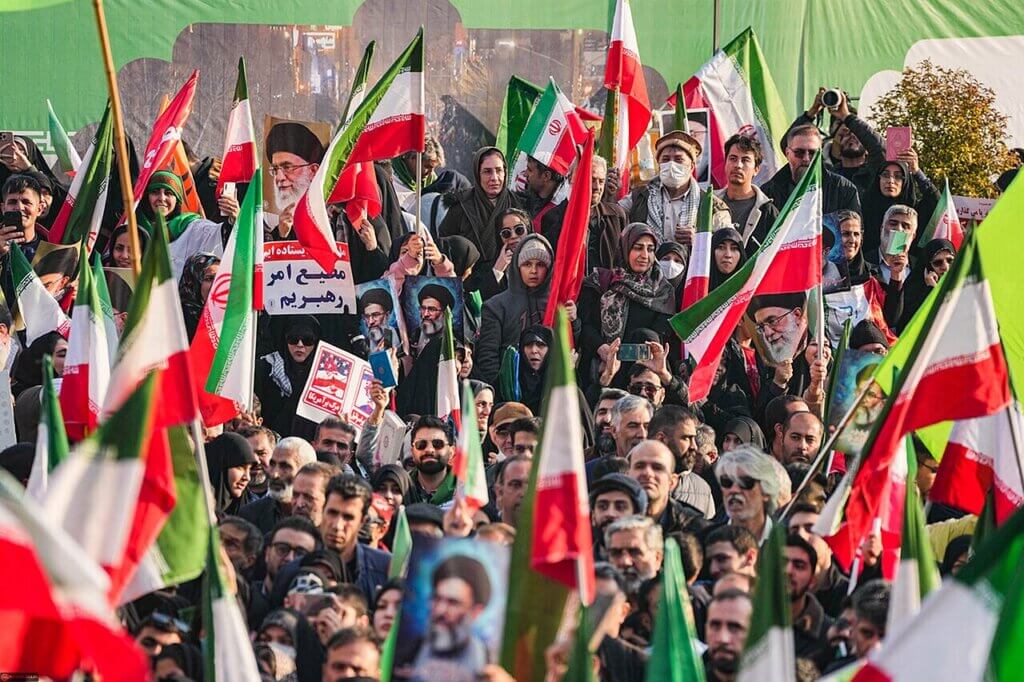
    On December 28, 2025, shopkeepers in Tehran’s Grand Bazaar went on strike, closed their stalls, and moved into the streets. The protests began amid a severe fall in Iran’s currency, high inflation, and worsening living conditions. Food prices had jumped 72 percent year-on-year, and daily power shortages had become a regular struggle. This sparked the largest uprising since the 1979 Islamic Revolution, spreading to over 100 cities in all 31 provinces of Iran. Students from universities in Tehran, Isfahan, Yazd, and other areas joined the marches, shouting “Death to Khamenei,” “Neither Gaza nor Lebanon, My Life for Iran,” and “Seyyed Ali will be toppled this year.” What began as economic discontent quickly grew into a movement calling for an end to the Islamic government itself.

    The nature of this uprising was different from the 2022 Woman, Life, Freedom movement. This time, young men had a more prominent role. Some chants expressed monarchist sentiments, aligning with exiled Crown Prince Reza Pahlavi’s increase in his political appeals to the international community. On January 8, Pahlavi called for unified protest, and by that evening, according to a European diplomat citing intelligence, 1.5 million people had taken to the streets of Tehran alone, with 5 million nationwide by January 9. At 8 p.m. that night, neighborhoods across Tehran burst into chanting, and then, almost at once, all communication to Iran was cut.

    Iranian authorities imposed what sources described as the largest internet shutdown in the country’s history, isolating it from the outside world and making independent verification of events nearly impossible. Amid this blackout, the killing began. Amnesty International documented security forces on the streets and rooftops of mosques and police stations, firing rifles and shotguns loaded with metal pellets at protesters, often targeting their heads and torsos. Hospitals in Tehran and Shiraz became overwhelmed with gunshot victims. “They were shooting at everyone, anyone they could get their hands on,” a 73-year-old protester told NBC News. “Women, children, men, the elderly, the young, it made no difference to them.”

    The death toll from January 8 and 9 remains one of the most disputed aspects of the crisis because the regime’s blackout was designed to keep the truth hidden. Iran’s government acknowledged 3,117 deaths, while the US-based Human Rights Activists News Agency published a list confirming 7,007 fatalities, with over 11,000 cases still under review. Two senior officials from the Iranian Health Ministry told journalists that the true toll from those two days could exceed 30,000. If accurate, this number would make those 48 hours the deadliest massacre of civilian protesters in recorded history. The Guardian reported that fewer than 10 percent of deaths may have been officially registered, with the state actively hiding casualties through mass graves and secret burials.

    The concealment was systematic. CNN gathered testimonies from more than a dozen families who said they were pressured to falsify the circumstances of their loved ones’ deaths. Families were told to register slain protesters as Basij members or describe them as martyrs killed by foreign agents or claim they had died from overdoses or accidents. In some cities, authorities buried bodies themselves in undisclosed locations when families refused to comply, informing them only afterward. At the Kahrizak forensics center south of Tehran, videos showed families searching among piles of body bags. One Amnesty International analyst counted at least 205 body bags at a single makeshift overflow morgue.

    The orders came from the top. The crackdown happened under the direct order of Supreme Leader Khamenei, who instructed the Supreme National Security Council to suppress the protests by any means necessary, with approval from all branches of government. Publicly, Khamenei accused protesters of acting on behalf of Trump, claiming they were destroying their streets to please Washington. The head of Iran’s judiciary vowed punishment would be “decisive and without leniency” and emphasized the need for speed on state television: “If we want to do a job, we should do it now. If it becomes late, two months, three months later, it doesn’t have the same effect.”

    By late January 2026, the regime had mostly regained control of the streets. Over 50,000 people had been arrested. A government-organized rally in Valiasr Square attracted a noticeably small crowd, a stark contrast to previous years. However, the divisions exposed by the uprising were not easily smoothed over. The Economist reported that the violence had broken internal consensus within the Islamic Republic, with former presidents, senior clerics, and ex-officials publicly distancing themselves from the crackdown. Al Jazeera documented an open clash between ex-leaders and hardliners in the weeks after the killings, with former President Hassan Rouhani reportedly telling associates that the regime had crossed a line it could not return from.

    With the streets quieted by force, the regime turned inward. Iranian security forces launched a campaign against the reformist movement, arresting Ebrahim Asgharzadeh, Mohsen Aminzadeh, and Azar Mansouri — senior members of the Reformists Front coalition — on February 8, followed by coalition spokesman Javad Emam on February 9. Their arrests were linked to a January reformist statement calling for Khamenei to resign and for a transitional governing council to take over. Nobel Peace Prize laureate Narges Mohammadi, already imprisoned, received an additional seven-year sentence. Doctors, lawyers, and journalists were also caught up alongside politicians. Protests continued to flare on university campuses, including at Sharif University of Technology, where students condemned Khamenei as a “murderous leader.”

    Outside Iran, the diaspora mobilized on an unprecedented scale. On February 14, solidarity protests took place around the world. In Munich, police counted around 250,000 demonstrators waving pre-revolutionary flags and chanting “Change, change, regime change.” The European Union and Ukraine designated the IRGC as a terrorist organization. Australia imposed sanctions on twenty Iranian individuals and three organizations. US President Trump announced a carrier strike group was heading to the region, warning Iran directly that mass executions would not end well for them.

    At the United Nations, concerns grew as executions seemed imminent. On February 27, UN Human Rights Chief Volker Türk called for an immediate moratorium on the death penalty in Iran, expressing horror that at least eight people — including two children — had received death sentences due to the protests, with another 30 at risk. A revolutionary court had already sentenced a man to death on charges of “enmity against God.” The UN’s Independent Fact-Finding Mission warned that tens of thousands of detainees faced torture, enforced disappearance, and expedited executions in violation of international due process. The Financial Times reported that Iran’s nuclear negotiators and Western counterparts were watching the protests with alarm, assessing how domestic unrest might affect stalled nuclear talks.

    Diplomatic efforts collapsed. After a failed third round of indirect negotiations in late February 2026 and with Trump’s self-imposed 10-day deadline for a deal expired, US and Israeli strikes against Iran began on February 28, targeting the country’s leadership, security apparatus, nuclear sites, and missile installations. Supreme Leader Khamenei was killed in the opening attack on Leadership House. UN human rights experts condemned the strikes as violations of the UN Charter, warning that military intervention must not be seen as a solution to the Iranian people’s grievances and that US and Israeli calls for Iranians to “seize control of their own government” were reckless and endangered countless civilian lives. Iran launched retaliatory attacks against Israel and American bases across the region, escalating a conflict now involving more than a dozen countries.

    The people who chanted in Tehran’s bazaars at the end of 2025 asked for electricity, for water, for a currency that could buy bread. Instead, they faced sniper fire, mass graves, and airstrikes. Whatever comes from the ruins of the Islamic Republic, those who survived will always remember the high cost of their demands.

    Sources

    Image: : REUTERS, Creator: Wa Lone

    https://www.pbs.org/newshour/world/thousands-demonstrate-for-change-in-iran-following-deadly-crackdown

    https://www.nbcnews.com/world/iran/iran-protests-crackdown-ayatollah-khamenei-supporters-tehran-rcna257541

    https://www.pbs.org/newshour/world/thousands-demonstrate-for-change-in-iran-following-deadly-crackdown

    https://www.cnn.com/2026/02/26/middleeast/iran-protesters-crackdown-pressure-intl

    https://www.reuters.com/business/media-telecom/un-rights-chief-warns-that-more-iranians-face-execution-after-protests-2026-02-27

    https://news.un.org/en/story/2026/03/1167077

    https://www.theguardian.com/global-development/2026/jan/27/iran-protests-death-toll-disappeared-bodies-mass-burials-30000-dead

    https://www.washingtonpost.com/world/2026/02/03/iran-protests-deaths-crackdown

    https://www.economist.com/middle-east-and-africa/2026/02/01/the-violence-in-iran-could-lead-to-civil-war

    https://www.aljazeera.com/news/2026/2/3/game-is-over-irans-ex-leaders-hardliners-clash-after-protest-killings

    https://www.npr.org/2026/02/09/nx-s1-5706524/crackdown-on-dissent-after-nationwide-protests-in-iran-widens-to-ensnare-reformist-figures

    https://www.nbcnews.com/world/iran/iran-arrests-protesters-reformists-crush-dissent-deadly-crackdown-rcna259294

    https://www.aljazeera.com/news/2026/2/14/iran-us-spar-as-diaspora-organises-rallies-abroad-calling-for-action

    https://www.reuters.com/business/media-telecom/un-rights-chief-warns-that-more-iranians-face-execution-after-protests-2026-02-27

    https://www.aljazeera.com/news/2026/2/14/iran-us-spar-as-diaspora-organises-rallies-abroad-calling-for-action

    https://www.bbc.com/news/articles/cd0y0ld39y0o

  • The Global Rollback of Women’s Rights

    The Global Rollback of Women’s Rights

    Over the past 5 years, a global phenomenon has emerged of a coordinated backsliding of women’s rights and freedoms. From the overturning of Roe v. Wade in the United States, to the Taliban’s near absolute prohibition on girls education in Afghanistan, to Poland’s near-total abortion ban this pattern has been apparent. At the current pace of change, gender equality won’t be achieved for another 300 years. Additionally, one in four countries report active backlash on women’s rights in 2024 according to UN Women’s 2024 Gender Snapshot. 

    In the US, the Supreme Court’s Dobbs v. Jackson Women’s Health Clinic decision in 2022 eliminated federal protections on abortion that had been laid out by Roe v. Wade nearly 50 years prior. The lack of federal protections resulted in 12 states now having total bans and several more having severe restrictions. As a result of this one in five patients traveled to other states to receive abortion care in 2023, compared to one in ten in 2020.  Additionally we have seen the maternal mortality rate in the US rise to 18.6 deaths per 100,000 live births in 2023, with black women being even higher at 50.3 deaths per 100,000 live births. 

    Poland is a clear look at how democratic EU member states can backslide. In 2020, Poland’s constitutional court tightened their law on abortion. The court made it nearly impossible to access legal abortions.  Despite a left leaning coalition government being elected in 2023 on promises of liberalizing the abortion laws, there is still a political deadlock. In addition to this, the United Nations Committee on the Elimination of Discrimination Against Women (CEDAW) issued findings in 2024 that found the restrictive abortion law in Poland to be the cause of “grave and systematic human rights violations” the government has still not implemented CEDAW’s recommendations despite these findings being published over a year ago. Poland is one of only two EU members to not legalize abortion on request. 

    Afghanistan represents the near most extreme (if not most extreme) end of the spectrum. Since the Taliban’s return in 2021, women’s rights have been rolled back to the extreme. UN Women’s Gender Gap Report from 2024 found that 78% of young Afghan women are not in education, employment, or training, and nearly 30% of girls never start primary school. In addition, with the Taliban banning women from accessing healthcare delivered by men paired with women being forbidden from working, healthcare for women is virtually inaccessible. This puts Afghanistan’s healthcare system on the brink of collapse in addition to the obvious disadvantages for women and their health.

    Timing indeed does not differ very much, because the rise of authoritarian populism globally has swiftly polarized gender into a wedge issue. Viktor Orbán’s Hungary, Jair Bolsonaro’s Brazil, and Donald Trump’s United States-arguably three strong examples-have all used “traditional family values” as a form of rhetoric to try to amass power for themselves. Religious nationalism amplifies these trends; the Taliban uses a version of Islamic law, Christian nationalism biases US politics, and the Catholic Church had much to do with Poland’s ban on abortion. Women’s bodies become the sites of religious and national identity. Antagonism to ‘gender ideology’ is the catch-all framework that has united the whole variegated opposition to LGBTQ+ rights and women’s autonomy.

    The ramifications are not limited to the health of individuals. In 2024, the IWPR analysis chronicled how reproductive restrictions trap women in poverty. Additionally, it shows that excluding women from the workforce costs countries billions of dollars in GDP. The Turnaway Study found increased debt, evictions, and bankruptcy among women denied an abortion. The elimination of female teachers, healthcare workers, and civil servants has led to economic collapse in Afghanistan.

    According to UN Women, if things don’t change, then gender equality will not be achieved until 300 years from now, according to projections based on current trends. The 2.2 million Afghan girls losing education represent irretrievable human potential. Having educated girls in society not only strengthens economies and reduces inequality, but contributes to more stable resilient societies overall. The World Health Organization confirms that 45% of abortions globally are unsafe when legal access is restricted, with consequences that mean hospitalizations, infertility, and preventable deaths.

    It is time for the international community to go beyond statements and towards concrete action, such as codifying gender apartheid as an international crime, imposing targeted sanctions on regimes and individuals who grossly violate women’s rights, and supporting grass-roots movements. Democratic countries should protect rights proactively through constitutional safeguards, rather than waiting for rollback. The global roll-back in the field of women’s rights is one of the defining struggles of our times, with implications far beyond gender into democracy, human rights, and the possibility of a more just future. 

    Sources

    Image: Jeenah Moon/Getty Images via AFP

    https://www.unwomen.org/en/news-stories/press-release/2025/03/one-in-four-countries-report-backlash-on-womens-rights-in-2024

    https://states.guttmacher.org/policies/?_gl=1*apnqwx*_gcl_au*NDY2MzU3OTgxLjE3NjMzMjY3Mzc.*_ga*MTEwMTM0MzA3MC4xNzYzMzI2NzM4*_ga_PYBTC04SP5*czE3NjMzMjY3MzckbzEkZzEkdDE3NjMzMjcxMjkkajYwJGwwJGgw

    https://www.guttmacher.org/2023/12/high-toll-us-abortion-bans-nearly-one-five-patients-now-traveling-out-state-abortion-care

    https://www.cdc.gov/nchs/data/hestat/maternal-mortality/2023/maternal-mortality-rates-2023.htm

    https://reproductiverights.org/news/one-year-on-poland-has-yet-to-act-on-un-recommendations-for-abortion-law-reform

    https://foreignpolicy-com.eu1.proxy.openathens.net/2024/02/12/poland-abortion-rights-pro-choice-election-coalition-pis-law-ban

    https://www.unwomen.org/en/articles/faqs/faqs-afghanistan

    https://www.amnesty.org.uk/womens-rights-afghanistan-history

    https://www.hrw.org/world-report/2025

    https://iwpr.org/2024-analysis-costs-of-reproductive-health-restrictions

    https://www.unicef.org/education/girls-education

  • How Menstrual Equity Can Drive Sustainable Development

    How Menstrual Equity Can Drive Sustainable Development

    Period. End of sentence is a documentary that is based in a small community outside of Delhi named Harpur District. The documentary highlights the period stigma and the struggles girls face when it comes to their menstruation.

    Some of the struggles girls mentioned in the documentary is the difficulty of changing their cloth, used for menstruation,  at school. They have to go to a far away location in order to change their cloth during school and sometimes men will crowd around them which then prevents the girls from changing their cloth. This leads to many girls not being able to attend or finish school. In addition, sometimes girls have a limited supply of cloths and sometimes have to use a dirty cloth which can be harmful to their health. 

    Regarding the period stigma, one belief held by many community members is that girls cannot pray to any gods or in the temple during their menstruation because the bleeding prevents their prayers from being heard. Another stigma is that menstruation is considered not clean and dirty. The stigmas can make it hard for girls to move freely or have open conversations surrounding their periods in their communities.

    The smart solution that was presented to this community was installing a pad machine that is simple to use and that just uses one ingredient which is cotton. The girls have working hours from 9am-5pm where they are able to work and make pads from scratch. After the pads are made, they are able to sell them to other girls in the community. 

    This is a sustainable solution because rather than just addressing the stigma or trying to change the community’s longtime held beliefs, taking action actually produces change. The money that is then made from selling the pads help girls gain financial independence. For example, a girl named Sneha would like to start a career in the police force and her money from selling pads has helped fund her training. 

    The women in the village have also found it hard to purchase pads from their local stores or pharmacies since many are owned by men. It is easier and more comfortable for girls to get their pads from other girls. 

    The solution of teaching girls how to produce pads, and then creating a market for them to sell pads creates a sustainable solution that can transform the lives of girls. Being able to move freely, attend school, and make their own money gives girls the opportunity to continue to pursue their education, have a job and financial independence, and have a solution for their menstruation. This can be an easy solution that international agencies or organizations can install in communities worldwide where girls do not have easy access to menstrual products. 

    To donate or to learn more visit thepadproject.com. 

    Sources