
By Samantha M
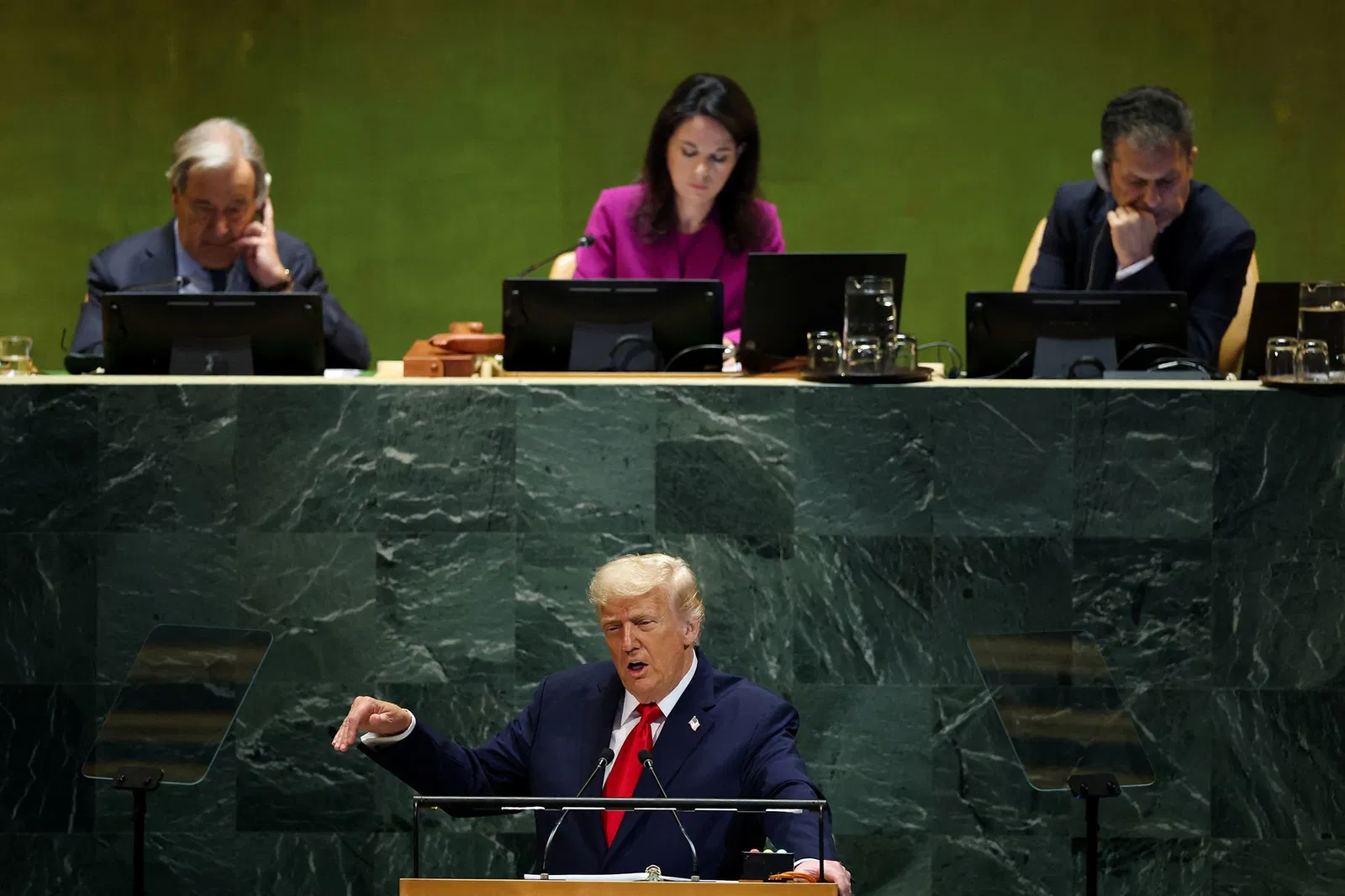
On September 23, 2025, President Donald Trump addressed the United Nations at the annual UN General Assembly conference, where he joined other world leaders to discuss global conflicts and resolutions.
Trump praised the accomplishments of his administration, both in domestic and foreign policy. He mentioned ending the open border policy in the U.S. and highlighted other achievements, such as increasing the NATO defense budget to 5%, striking Iran’s nuclear sites, and claiming to have ended seven wars during his 2025 presidency.
The “seven wars” he referred to are not all full-scale wars but rather conflicts. The countries he mentioned are Iran-Israel, Egypt-Ethiopia, India-Pakistan, Serbia-Kosovo, Rwanda-DRC, Armenia-Azerbaijan, and Cambodia-Thailand. The conflicts were reportedly ended by reaching an agreement or ceasefire, some of which Trump claimed to have facilitated.
Trump criticized the UN for not “lending help or support” while he was facilitating an end to the “seven wars.” He stated that the “UN has tremendous potential” but has not lived up to it. He did not, however, suggest ways the UN could improve.
Trump expressed disapproval of recognizing Palestine as a state, calling it a “reward for Hamas.” He demanded the return of hostages from the October 7th attack. He did not mention war crimes allegedly committed by Israel or propose a plan of action for a ceasefire.
The U.S. has repeatedly used its veto power on several UN resolutions regarding aid to or a ceasefire for Palestine. For example, on September 18, 2025, the U.S. vetoed a Security Council resolution demanding an immediate, permanent ceasefire, the unconditional release of all hostages, and the lifting of restrictions on humanitarian aid. The vote was 14 in favor and one against. The U.S. cited the resolution’s failure to explicitly condemn Hamas and recognize Israel’s right to self-defense. In June 2025, the U.S. also vetoed a resolution that would have reinforced a previous ceasefire deal (Resolution 2735) and demanded an immediate ceasefire and the lifting of aid restrictions.
In regard to the Russia-Ukraine war, Trump stated that the U.S. would not impose economic pressures, such as tariffs, on Russia until all NATO countries stop buying Russian oil and gas. He also mentioned that India and China are funding Russia by purchasing their oil and gas.
Trump also called for an end to biological weapons. Regarding climate change, he claimed it is not real and that green energy is too expensive, urging countries to shift back to traditional energy sources.
Since Trump took office, there has been reduced funding for important UN institutions that heavily rely on U.S. support, including UNESCO, the Human Rights Council, UNHCR, and UNDP. The U.S. has not paid its dues for the 2024-2025 year, with a balance of $3 billion, of which $1.5 billion is for peacekeeping and $1.5 billion is for the regular budget. While the U.S. has historically been the biggest funder to the UN, this funding gap could allow another country to take the lead. Since taking office, Trump has pursued an “America First” agenda, significantly withdrawing foreign aid and closing USAID this year. Trump has made it clear that the U.S. objective will be to serve itself first, which will significantly shift how the U.S. works with other countries and the UN moving forward.